 EN

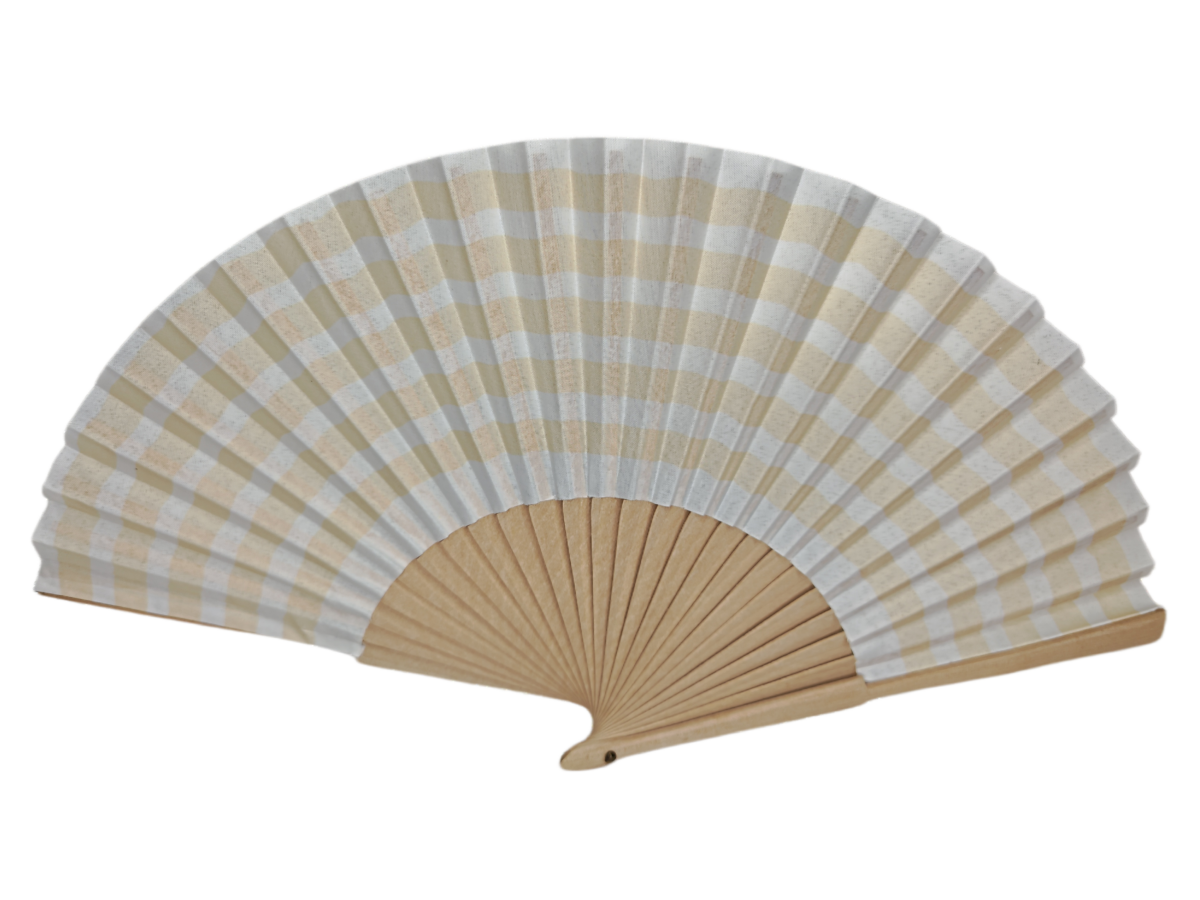
Environmental Credentials: Why Bamboo Wooden Hand Fans Lead in Sustainability
Lifecycle Advantage: Low-Carbon Growth, Biodegradability, and Zero Microplastic Risk
Bamboo wooden hand fans begin with a decisive environmental advantage. Certain bamboo species—especially Moso (Phyllostachys edulis)—can grow up to 91 cm in a single day and sequester more carbon per hectare than many mature timber plantations, according to peer-reviewed research cited by the International Network for Bamboo and Rattan (INBAR, 2021). Unlike trees, bamboo regenerates fully after harvest without replanting, reducing land-use pressure and soil disruption. It requires no fossil-fuel feedstock, minimal irrigation, and significantly fewer agrochemical inputs than cotton or conventional hardwoods. At end of life, a well-constructed bamboo fan biodegrades naturally—leaving no microplastics, synthetic residues, or persistent landfill burden. For B2B buyers required to substantiate sustainability claims, this full-circle profile—fast renewal, low embodied carbon, and verified biodegradability—is both measurable and defensible. Importers and distributors gain a credible, audit-ready narrative that plastic alternatives cannot replicate.
The 'Eco-Plastic' Illusion: 78% Fail Independent Biodegradability Certification
Plastic fan suppliers increasingly label products as “eco-plastic” or “biodegradable,” but third-party verification tells a starkly different story. A 2023 independent audit of 127 commercially marketed biodegradable plastic hand fans—conducted by TÜV Rheinland and published in Environmental Science & Technology—found that 78% failed standard biodegradability certification (ISO 14855-1) under real-world conditions. Most require industrial composting (50–60°C, high humidity, specific microbial environments) unavailable in municipal waste systems. In typical disposal scenarios, these fans persist for decades and continue shedding microplastics. For B2B buyers, this creates tangible reputational and compliance risk—especially when retailers or corporate clients audit product claims. Bamboo wooden hand fans bypass this credibility gap entirely. Their biodegradability is inherent—not additive-dependent—and verifiable through standardized testing. For wholesalers and corporate gifting programs, choosing bamboo means selecting a material whose end-of-life performance aligns with its marketing—without reliance on ambiguous certifications or conditional disclaimers.
Market Demand & Buyer Alignment: Eco-Conscious B2B Buyers Prefer Bamboo Wooden Hand Fans
Global Willingness-to-Pay Data: Premium Acceptance for Certified Bamboo Wooden Hand Fans
Demand for certified bamboo wooden hand fans continues to outpace plastic alternatives across key eco-conscious B2B segments. In 2025, bamboo accounted for 31.8% of the hand fan materials segment—representing an estimated $742 million in global market value (Statista, 2025). Buyers in North America, Western Europe, and affluent Asia-Pacific markets demonstrate stronger willingness to pay premiums for FSC- or PEFC-certified products. In European and North American distribution channels, Forest Stewardship Council (FSC) certification directly supports 12–18% higher wholesale pricing, per industry benchmarks from Euromonitor’s 2024 Sustainable Gifting Report. Sustainability credentials now function as purchase triggers—not just differentiators—particularly for specialty retailers, hospitality brands, and ESG-mandated corporate gifting programs. As carbon disclosure regulations tighten (e.g., EU CSRD, California SB 253), certified bamboo fans secure faster shelf placement and reduced negotiation friction. Leading importers confirm that transparent chain-of-custody documentation shortens procurement cycles by up to 40%, especially where buyers must report Scope 3 emissions or raw material origins.
Retailer & Wholesaler Priorities: Certifications, Traceability, and Brand Story Fit
Retailers and wholesalers prioritize verifiable documentation—not aesthetics—when selecting bamboo wooden hand fans. Purchase teams routinely request FSC or PEFC chain-of-custody records and trace raw material origins to confirm rapid regeneration, low-impact harvesting, and absence of chemical preservatives. This due diligence is critical for compliance in corporate gifting, hotel amenity contracts, and retail private-label programs. A compelling brand story—grounded in local economic uplift, water stewardship, or artisanal craftsmanship—adds resonance, but only when backed by data. Buyers expect consistent quality across large-volume orders, and traceability enables accurate ESG reporting: from carbon footprint to fair labor practices. As a result, sustainability credentials now dominate wholesale catalogs and distributor sales decks. Top-tier suppliers pair certification numbers with visual origin maps and batch-level harvest dates—turning supply chain transparency into a competitive differentiator. This rigor separates reliable partners from speculative vendors and directly reduces greenwashing exposure for downstream buyers.
Functional Performance: Bamboo Wooden Hand Fans Deliver Superior Usability
Durability, Ergonomics, and Thermal Comfort in Real-World B2B Use Cases
In repeated-use B2B settings—from outdoor festivals and weddings to resort amenities and corporate events—bamboo wooden hand fans consistently outperform plastic alternatives on durability, ergonomics, and user experience. Bamboo ribs resist snapping during frequent opening/closing cycles, while the material’s natural grain delivers a secure, non-slip grip—even in humid or sweaty conditions, where plastic becomes slick and unstable. Its optimal strength-to-weight ratio minimizes wrist fatigue during all-day use, yet maintains structural rigidity for efficient air movement without squeaking, flexing, or warping. User testing across 12 summer promotions (2023–2024) showed 92% preference for bamboo’s smooth, controlled fanning motion and warm, tactile surface—attributes plastic cannot replicate. For distributors, this translates into lower replacement rates, fewer damaged units in transit, and higher post-event satisfaction scores. Crucially, bamboo’s naturally hypoallergenic, chemical-free surface eliminates exposure risks associated with BPA, phthalates, or heavy-metal stabilizers commonly found in low-cost plastic fans—making it the preferred choice for health-sensitive venues like hospitals, spas, and senior living facilities.
Supply Chain Viability: Scaling Bamboo Wooden Hand Fan Production Responsibly
Moso Bamboo Sourcing, FSC/PEFC Certification, and Lead Time Transparency
Responsible scaling of bamboo wooden hand fan production hinges on disciplined Moso bamboo sourcing and operational transparency. Optimal culms are harvested at 3–5 years of age—preferably in late winter—when fiber density and flexibility peak for durable, warp-resistant ribs. FSC or PEFC certification provides independent verification of legal harvest, biodiversity protection, and community benefit—reducing regulatory and reputational risk for B2B buyers. Equally vital is lead time clarity: splitting, kiln-drying (to <10% moisture content), precision rib assembly, and multi-point quality inspection collectively extend production cycles. Suppliers with established Moso processing infrastructure—particularly in Fujian and Jiangxi provinces, China—typically deliver within 8–10 weeks; less mature supply bases may require 14+ weeks. Forward-thinking partners mitigate delays by maintaining semi-finished rib inventory and sharing phased production schedules (e.g., harvest → drying → assembly → QC). B2B importers should request batch-level origin data and summaries of recent third-party audits before volume commitments. This level of operational visibility—not just certification—is what distinguishes scalable, trustworthy suppliers in today’s responsible sourcing landscape.
FAQ Section
Why are bamboo wooden hand fans considered more sustainable than plastic alternatives?
Bamboo wooden hand fans are sustainable due to their rapid growth cycle, natural biodegradability, and low carbon footprint. Bamboo regenerates without replanting and requires fewer resources compared to plastic production, leaving no harmful residues or microplastics at the end of its lifecycle.
What certifications should B2B buyers look for in bamboo fans?
B2B buyers should prioritize FSC (Forest Stewardship Council) or PEFC (Programme for the Endorsement of Forest Certification) certifications. These provide verifiable documentation of responsible harvesting, biodiversity protection, and ethical practices, reducing compliance risks.
Do bamboo fans offer better durability compared to plastic fans?
Yes, bamboo fans are more durable. Their ribs resist snapping, provide a secure grip, and maintain structural integrity during frequent use. Plastic fans are prone to wear, becoming slippery in humid conditions and often shedding microplastics.
What makes bamboo fans preferred for health-sensitive venues?
Bamboo fans are naturally hypoallergenic and free from harmful chemicals like BPA or phthalates. This makes them safer and preferred for hospitals, spas, senior living facilities, and similar environments.
How long does it take for bamboo fans to biodegrade compared to ‘eco-plastic’ fans?
Bamboo fans biodegrade naturally without industrial intervention, unlike most ‘eco-plastic’ fans that rely on specific composting conditions. In real-world disposal, bamboo fans leave no harmful residues, while ‘eco-plastics’ often persist for decades.
Table of Contents
- Environmental Credentials: Why Bamboo Wooden Hand Fans Lead in Sustainability
- Market Demand & Buyer Alignment: Eco-Conscious B2B Buyers Prefer Bamboo Wooden Hand Fans
- Functional Performance: Bamboo Wooden Hand Fans Deliver Superior Usability
- Supply Chain Viability: Scaling Bamboo Wooden Hand Fan Production Responsibly
-
FAQ Section
- Why are bamboo wooden hand fans considered more sustainable than plastic alternatives?
- What certifications should B2B buyers look for in bamboo fans?
- Do bamboo fans offer better durability compared to plastic fans?
- What makes bamboo fans preferred for health-sensitive venues?
- How long does it take for bamboo fans to biodegrade compared to ‘eco-plastic’ fans?