 EN

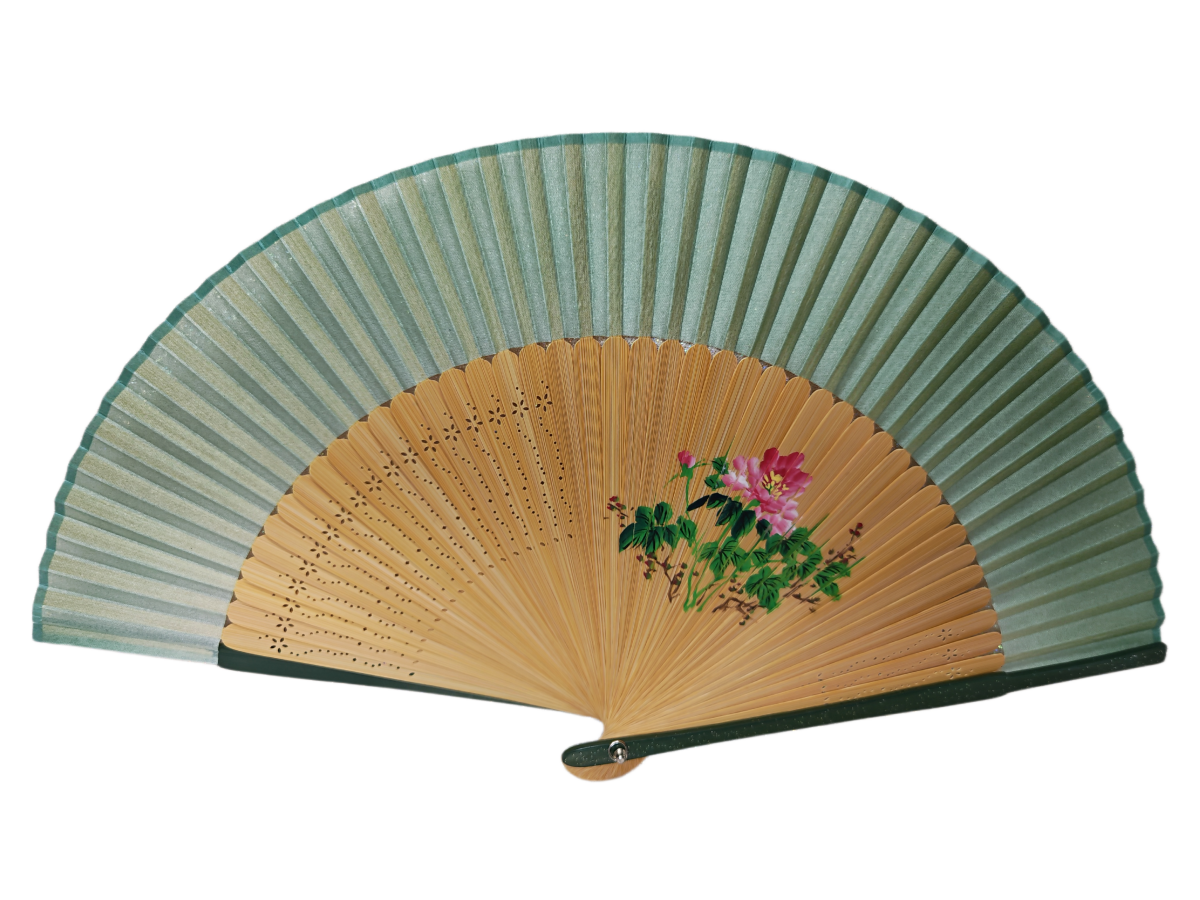
Authenticity and Craftsmanship of Bridal Lace Hand Fans
Discerning genuine lace protects both aesthetic value and long-term durability in bridal lace hand fans. The following hallmarks separate true handmade work from machine-made copies.
Honiton vs. Brussels Lace: Identifying Genuine Handmade Techniques
Honiton lace, developed in Devon, uses multiple bobbins to create naturalistic floral motifs on a fine net ground. Brussels lace combines bobbin lace motifs with a needle-made hexagonal ground, producing an airier surface. Under magnification, Honiton work shows a slightly raised, sculpted outline with needle-stitched connections between motifs. Brussels lace displays an even, near-invisible mesh join and may incorporate subtle shadow effects through varied stitch density. Handmade production leaves faint tension shifts and tiny irregularities, whereas machine lace appears perfectly uniform and often has a glue-stiffened back. A leading textile conservation body notes that one Honiton fan leaf may require 25–35 hours of bobbin work (Heritage Craft Association 2023). Brussels lace typically uses much finer thread than Honiton—often exceeding 100 threads per inch—and lacks the glue residue common in die-cut imitation lace. Collectors should note that Honiton lace usually features floral motifs with detached petals joined by bars, while Brussels lace forms a continuous allover pattern—a structural distinction visible even in small fan panels. When examining a bridal lace hand fan, run a fingertip along the motif edges: true Honiton has a slightly corded ridge, while Brussels lace feels flat and fluid.
Key Hallmarks of Authentic Bridal Lace: Bobbin Work, Gimp Threads, and Motif Consistency
Gimp threads serve as thicker outline cords that define each motif and prevent fraying. In authentic bridal lace, gimp is couched by hand, following curves without abrupt angles. Bobbin work produces varied crossing angles and slight tension differences; under a loupe, these crossings resemble tiny twisted bars—not flat machine stitches. Motif consistency means floral or scroll repeats share scale, thread weight, and stitch character, but no two repeats are identical. The Lace Guild notes that a genuine fan leaf may show a 10–20% variation in stitch density between identical motifs (2024). Machine-made copies repeat motifs perfectly and often fuse threads with heat or adhesive. Authentic pieces also have hand-finished edges—typically rolled or overcast—rather than laser-cut selvedges. When assessing bulk orders, request a magnified image of the lace reverse; genuine bobbin lace shows no continuous machine chain stitch. Color should be consistent across motifs, with no white glue spots or synthetic shine. Ask suppliers whether gimp threads are silk or cotton; silk gimp is a common marker of higher-grade handmade work.
Verifying Provenance: Certifications, Maker Signatures, and Ethical Sourcing
Genuine bridal lace hand fans should arrive with a signed certificate of authenticity naming the lace atelier, technique, and production date. Many artisans also stitch a small signature or maker’s mark onto the fan guard, inner leaf, or storage box. A traceability code linked to a documented batch supports verification for bulk orders, ensuring every fan matches the approved sample. Ethical sourcing certification confirms that cotton or silk threads were produced under fair labor conditions and that no endangered shell or wood was used in the frame. According to the Craft Council 2024, provenance proof is now a standard expectation for orders of 50 units or more. Avoid sellers who blur the distinction between handmade and hand-finished—or who cannot provide clear origin details. Request a copy of the atelier’s craft certification before finalizing the contract. A reputable atelier will offer a repair or replacement policy tied to the documented batch, reinforcing quality control across large orders.
Durability and Functional Design for Wedding Day Use
Frame Materials Compared: Bamboo, Pearwood, and Premium Acrylic for Strength and Weight
When choosing bridal lace hand fans for all-day use, frame material affects both resilience and comfort. Bamboo offers lightweight flexibility with high tensile strength, though its natural fibers can warp in high humidity unless sealed. Pearwood provides a denser, smoother surface that resists splintering and supports intricate carving—at the cost of added weight. Premium acrylic delivers uniform rigidity and moisture resistance, making it ideal for outdoor ceremonies or extended photo sessions. According to a 2025 Materials Performance Institute report, acrylic frames withstand 30% more flexural stress than untreated bamboo under controlled humidity. For most weddings, bamboo balances easy handling and durability; pearwood suits heirloom-quality lace fans; acrylic stands up best in damp or high-use settings. For destination weddings in humid climates, sealed bamboo or acrylic are safer than unsealed pearwood. Cost varies by finish, but bamboo remains the most accessible option for bulk purchases. The table below summarizes key differences.
| Material | Strength | Weight | Moisture Resistance | Best For |
|---|---|---|---|---|
| Bamboo | High | Very light | Moderate (sealed) | Indoor, budget-friendly |
| Pearwood | Very high | Medium | Good | Heirloom, detailed carving |
| Premium acrylic | High | Light | Excellent | Outdoor, humid, high-use |
Secure Lace Attachment Methods That Prevent Fraying and Slippage
Proper attachment keeps delicate lace intact through hugs, dances, and repeated folding. Hand-stitching with fine silk or polyester thread remains the most secure method, allowing lace to flex without tearing. Some artisans reinforce edges with a narrow cotton binding or backing fabric to prevent fraying at the fan’s rim. Avoid adhesives that become brittle over time; mechanical stitching distributes tension evenly across the frame. Quality checks should confirm that lace does not shift when the fan opens and closes rapidly. For bulk orders, request a stitch-density sample: at least six stitches per inch along the lace edge reduces slippage by an estimated 40% over adhesive-only attachment (Textile Durability Review 2024). This standard ensures lace fans retain their shape from ceremony to reception. Additionally, double-check that all thread ends are securely knotted and hidden, and inspect the fan under bright light to catch loose loops before packaging.
Scalable Sourcing Strategies for Bridal Lace Hand Fans (50+ Units)
Balancing Lead Times: Handmade, Semi-Handmade, and Small-Batch Production Options
For orders of 50 or more bridal lace hand fans, the first sourcing decision is whether to choose fully handmade, semi-handmade, or small-batch production. Fully handmade options—using genuine bobbin lace motifs assembled by artisans—typically require 8–12 weeks for 50 units. Semi-handmade methods pair machine-made lace appliqués with hand-finished frames and often shorten lead times to 4–6 weeks. Small-batch production, where a workshop reserves capacity across multiple client orders, can offer 6–8 weeks but may shift with seasonal demand. For rush needs, consider a hybrid: handmade lace on ready-stock frames can cut turnaround without sacrificing visible authenticity. Always confirm whether the quoted lead time begins at deposit or final artwork approval—this detail alone can add two weeks.
Customization Consistency and Quality Control Across Bulk Orders
For 50 or more bridal lace hand fans, consistency is the main risk. Request a batch control sample before full production, with written specifications for lace motif size, thread shade, and frame finish. Ask for stage-by-stage photos or video, and agree on an acceptable defect rate—commonly 2–3% for handmade accessories. Splitting delivery into 25-unit lots allows early correction before remaining stock is produced. Review a second sample from the final production run before accepting the full lot; this step catches drift in tension or shade.
Frequently Asked Questions (FAQs)
How can I distinguish between genuine handmade and machine-made bridal lace hand fans?
Genuine handmade lace features small irregularities, a slightly raised outline, and no glue residue or perfect uniformity seen in machine-made copies. Examine edge finishing, gimp threads, and motif consistency to verify authenticity.
What are the main differences between Honiton and Brussels lace?
Honiton lace features natural-looking floral motifs with slightly corded ridges and a needle-stitched connection, while Brussels lace has an airier surface with near-invisible mesh joins and incorporates finer threads.
What frame material should I choose for bridal lace hand fans?
Bamboo is lightweight and flexible; pearwood is denser and better for detailed carving but heavier. Premium acrylic is best for outdoor or high-humidity use, offering superior rigidity and moisture resistance.
How should the lace be attached to ensure durability?
Lace should be hand-stitched with fine silk or polyester thread. Secure edges with narrow cotton binding if necessary. Avoid adhesive-only attachments, as they can become brittle over time.
What should I look for when placing bulk orders for over 50 units of bridal lace hand fans?
Confirm clear provenance, certifications, and batch control samples. Ensure consistency in lace motif size, thread quality, and frame finish. Monitor production updates and request stage-by-stage verification.
Table of Contents
- Authenticity and Craftsmanship of Bridal Lace Hand Fans
- Durability and Functional Design for Wedding Day Use
- Scalable Sourcing Strategies for Bridal Lace Hand Fans (50+ Units)
-
Frequently Asked Questions (FAQs)
- How can I distinguish between genuine handmade and machine-made bridal lace hand fans?
- What are the main differences between Honiton and Brussels lace?
- What frame material should I choose for bridal lace hand fans?
- How should the lace be attached to ensure durability?
- What should I look for when placing bulk orders for over 50 units of bridal lace hand fans?